How to Price Networking Installation Jobs in Kenya: A Guide for Freelance Technicians

Most technicians don't lose money on installation jobs because they can't do the work. They lose money because they price the work like an afterthought, a round number pulled together the night before a site visit, with no real structure behind it. Then three months later they're still absorbing the cost of a cable run they forgot to measure, or a client who expected "free" troubleshooting for a year because the quote never said otherwise.
This is a pricing framework, not a rate card. Rates move with the market, your location, and your experience. The structure underneath them doesn't.
Why "Per Job" Flat Pricing Fails Most Technicians
A lot of freelancers quote a single number for a whole job, something like "estate WiFi setup, KES 25,000", without breaking down what's inside it. This works until the job scope changes, which it almost always does once you're on site. A client who thought "WiFi setup" meant one router in the living room now wants coverage in a boys' quarters 40 meters away, through two concrete walls. Without a documented breakdown, you either eat the extra cost or fight for a variation, and fighting for a variation after the fact damages the relationship more than agreeing to it upfront would have.
Every quote should be built from five separate components, priced individually, then summed:
Labor, your time, scoped by task, not by "the job"
Materials and hardware, the actual cost of what goes into the wall or rack
Markup on materials, your margin for sourcing, warranty exposure, and carrying stock
Travel and site costs, fuel, parking, time lost in Nairobi traffic
Contingency, a buffer for the unknowns every site visit reveals
Add them separately, then present the client with either a line-itemized quote or a single total backed by a breakdown you keep on file. Never skip the breakdown internally, even if the client only sees the total.
1. Pricing Labor: Day Rate vs Per-Task Pricing
There are two defensible ways to price your time, and which one you use should depend on the job type, not on habit.
Day rate works best for jobs with unpredictable scope on site: full office network builds, large structured cabling jobs, or anything where you can't know the exact hour count until you're walking the space. A typical junior-to-mid-level technician day rate in Kenya's urban markets sits in a broad KES 2,500 to 5,000 per day range for solo work, with senior technicians or those running a small crew billing KES 6,000 to 10,000 or more per day. These are starting reference points, not fixed figures. Adjust for your region, your certifications, and what similar technicians in your area are actually charging, since rates in Nairobi, Mombasa, and smaller towns diverge meaningfully.
Per-task pricing works best for repeatable, well-defined work: a hotspot configuration, a single access point install, a PPPoE setup. Here you price the task itself, regardless of how long it takes you personally. This rewards efficiency. The technician who can configure a MikroTik hotspot in 45 minutes earns the same as one who takes two hours, because the client is paying for the outcome, not your clock.
A practical rule: quote per-task for anything under half a day, quote day rate for anything that could reasonably run long. Mixing the two inside a single quote (task pricing for most items, day rate for the unpredictable parts) is normal and often the most accurate approach.
2. Pricing Structured Cabling by the Drop
Cabling is where inexperienced technicians most consistently underquote, because the cable itself looks cheap on a spec sheet and the labor gets mentally rounded down.
Price cabling per drop (one cable run from patch panel or switch to one wall outlet), not per meter and not per job. A single drop price should absorb:
Cable cost (Cat5e vs Cat6: Cat6 typically costs 20 to 40% more per meter, and that difference should be reflected in your per-drop price if the client wants Cat6)
Connector, faceplate, and patch panel port cost
Labor for running, terminating, and testing that one run
A portion of your cable tester or certification tool's depreciation, if you're certifying runs
A rough framework: take your cost of materials per drop, add your labor time per drop at your hourly rate, then apply your markup. If a drop takes 30 to 45 minutes end to end including termination and testing, and your effective hourly rate is KES 500 to 800, labor alone is roughly KES 250 to 600 per drop before materials. Build your per-drop price from that logic rather than copying a number you heard from another technician, because their cable run lengths, wall types, and conduit situations were different from yours.
Always price a site survey separately if the job is large enough to need one, even if it's a nominal fee. A free survey trains clients to expect free scoping on every future job, and it costs you real time you're not being compensated for.
3. Pricing WiFi and Router Installations
This is where the hardware you spec directly affects both your materials cost and the value you can justify charging for labor, because the right hardware choice is itself expertise the client is paying for.
Break a WiFi installation quote into:
Hardware cost (at your buying price, before markup)
Configuration labor (initial setup, SSID/security config, firewall rules if needed)
Coverage testing (walking the space with a signal meter or phone app to confirm actual coverage, not assumed coverage)
Client handover (a short walkthrough, this is a real cost of your time and should be priced in, not thrown in free)
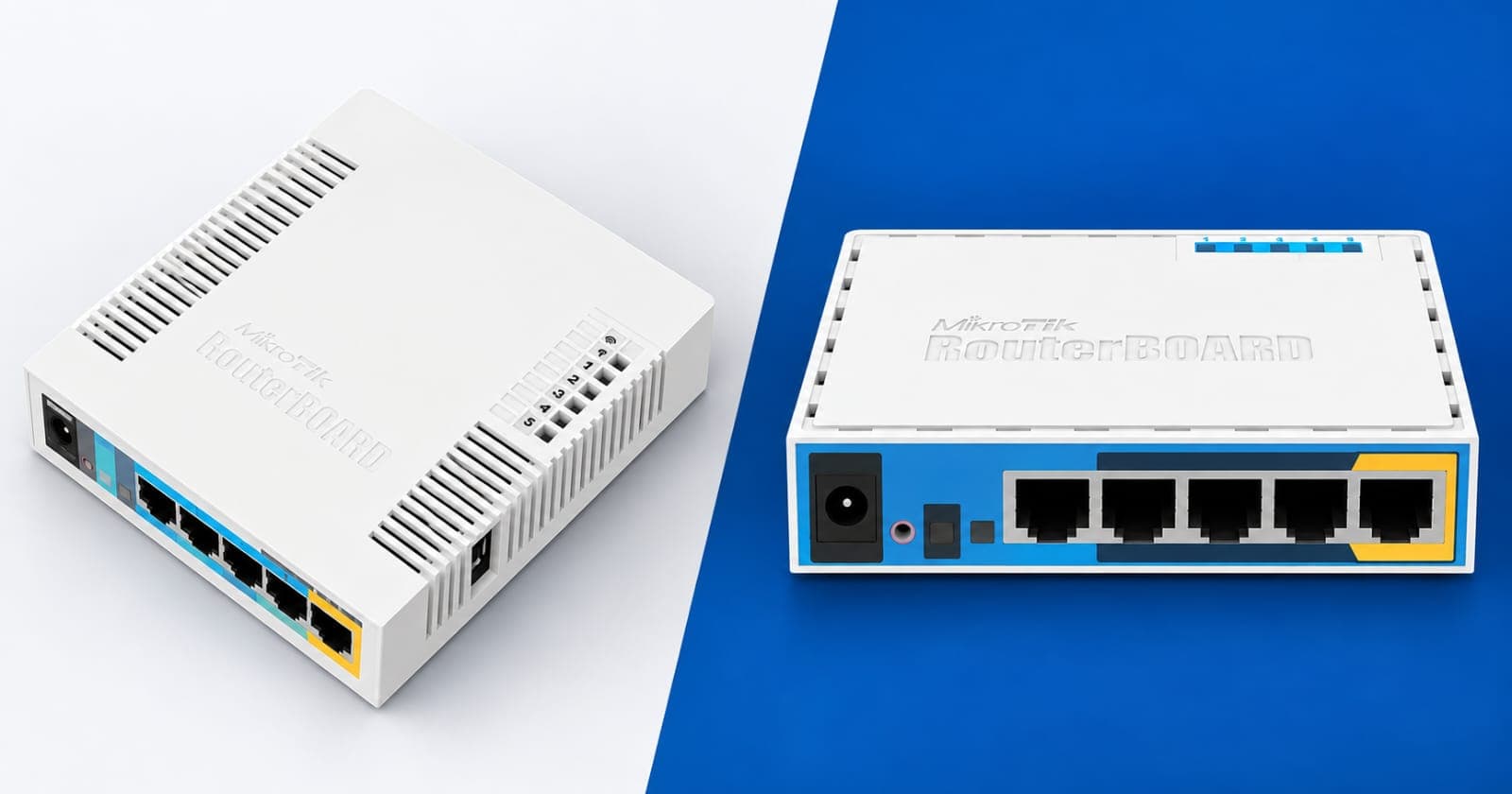
Hardware selection matters for your quote, not just for the outcome. A single-room office with devices close to the router doesn't need the same radio as a compound with outbuildings. If you're specifying a MikroTik hAP RB951Ui-2nD for a small apartment versus a MikroTik RB951Ui-2HnD for a larger space needing high-power range, that's a real cost difference you pass through. It's also a professional judgment call worth billing for, because a client who bought the wrong router themselves off a marketplace listing usually ends up calling a technician anyway to fix the coverage problem.
Don't price hardware at your cost and call it done. Apply your standard markup (see below) even on pass-through hardware. You're carrying the warranty risk, the sourcing time, and the capital tied up in stock if you keep inventory on hand.
Choosing a Router by Client Budget, Not Just by Job Size
Part of pricing well is recommending hardware that actually matches what the client is willing to spend, not just the router you personally prefer to install. Kenyan clients range from a landlord fitting out one apartment to a small business needing a rack-mounted router that can handle real routing and firewall load. Knowing where each MikroTik model sits on the price ladder lets you quote confidently instead of guessing, and it gives you a natural upsell path when a client's budget allows more than the bare minimum.
Entry-level budget (roughly KES 5,999 to 9,500). This is where most small apartment and single-room jobs land. The MikroTik RB951Ui-2HnD Refurb is the lowest-cost genuine option for a client who just wants a stable connection and doesn't need gigabit LAN. If the budget stretches slightly, the MikroTik RB951Ui-2HnD new unit gives the client a warranty and more RAM and storage headroom for firewall rules, at a modest premium over the refurb. For dense, small spaces where lower transmit power actually helps, the MikroTik hAP RB951Ui-2nD sits in the same tier and is worth quoting instead when the space calls for it rather than defaulting to the higher-power board out of habit.
Mid-tier budget (roughly KES 12,500 to 18,500). Once a client needs gigabit LAN speeds, a small office, a business with a fibre connection, or a client who's outgrown a 10/100 board, this is where you move them. The MikroTik RB760iGS hEX S is the natural step up for gigabit ports at a price that's still accessible for a small business. If the install is going into a rack rather than sitting on a desk or shelf, the MikroTik L009UiGS-RM covers that use case at a similar price point.
Higher budget (roughly KES 32,000). This tier is for clients who need real routing horsepower: a small ISP, a business running multiple VLANs, heavier firewall rules, or a WISP setup with several access points hanging off one core router. The MikroTik RB4011iGS+RM gives you 10 gigabit ports and enough processing power for serious routing work, while the MikroTik RB5009UG+S+IN is the pick when the client also needs an SFP+ port for a fibre uplink or a future upgrade path.
Walking a client through these tiers, rather than pitching one router by default, does two things for your business. It shows you're recommending based on their actual need and budget instead of pushing whatever you have in stock, and it opens the door to a bigger sale when their budget genuinely supports it, without you having to hard-sell anything.
4. Materials Markup: What to Actually Charge
A common mistake is charging materials at cost "to be fair to the client." This undercuts your own business. Markup on hardware and materials compensates you for:
Time spent sourcing and comparing suppliers
Capital tied up if you buy stock ahead of the job
Being the point of contact if hardware fails under warranty
The convenience you're providing, since the client isn't sourcing it themselves
A 20 to 35% markup on hardware is a reasonable working range for most freelance technicians in Kenya, with genuine, warrantied equipment justifying the higher end of that range more easily than grey-market stock. Cabling consumables (connectors, faceplates, trunking) often carry a higher percentage markup since the unit cost is small and the labor to source and stock them is disproportionate to their price.
State clearly to the client, even informally, that your quote is for genuine equipment with manufacturer warranty. This is also a trust point worth raising directly. Kenyan technicians increasingly deal with counterfeit networking hardware entering the market, and a client who later finds a cheaper "MikroTik" router online is comparing an unwarrantied grey import to your quoted price without realizing it.
5. Travel, Access, and Site Costs
Nairobi traffic alone can turn a 20-minute job into a half-day commitment. Price travel and site access as their own line, not folded silently into labor:
Fuel/matatu/boda cost to and from site
Time cost of travel, especially for jobs outside your normal operating radius. If a round trip eats two hours you could have spent on another job, that's billable time, not free overhead
Access constraints, sites requiring scaffolding, roof access, or working after hours (e.g., a live office that can only be cabled after 6pm) should carry a premium, since after-hours work reduces the number of other jobs you can take that day
For jobs outside your normal city or town, quote travel as a separate fixed fee upfront rather than absorbing it, especially for one-off out-of-town installs where you can't spread the travel cost across multiple client visits that week.
6. Contingency: Pricing for What You Can't See Yet
Every experienced technician has a story about a wall that turned out to be solid concrete instead of drywall, or a ceiling void full of asbestos-era insulation that changed the whole cabling plan. Build a 10 to 15% contingency into every quote for jobs you haven't fully surveyed, and state in the quote (even in one sentence) that the price assumes standard wall/ceiling conditions and may be revised if site conditions differ materially.
This single sentence protects you more than almost anything else in this guide. It turns an awkward mid-job renegotiation into a pre-agreed clause you're simply invoking.
Putting It Together: A Sample Quote Structure
For an estate WiFi installation covering a two-storey house with one high-power router, three cable drops to weak-signal rooms, and client handover:
Line item | What it covers |
|---|---|
Site survey (if not already done) | Fixed fee or waived if proceeding to install |
Router hardware (at markup) | Router cost plus 20 to 35% markup |
Cabling materials (3 drops) | Cable, connectors, faceplates at marked-up cost |
Cabling labor (3 drops) | Per-drop labor rate x 3 |
Configuration and testing | Fixed task fee |
Coverage verification | Fixed task fee or rolled into configuration |
Travel | Fixed fee based on distance |
Contingency (10 to 15%) | Applied to the subtotal, not itemized separately to the client |
Total | Sum of the above |
Presenting this level of detail, even summarized, does two things for lead generation as much as for protection. It signals professionalism that separates you from an informal "guy who does WiFi," and it gives the client a reason to come back to you specifically rather than shop the next job on price alone, because they've seen exactly what they're paying for.
Pricing Recurring Work Differently From One-Off Installs
If a client wants ongoing support, router firmware updates, periodic security reviews, or a standing arrangement to handle issues as they come up, don't price that the same way you price a one-off install. A retainer or maintenance contract should be priced on expected time commitment per month plus a response-time premium, not as a discounted version of your install rate. Faster response times (same-day vs within-a-week) justify a higher retainer, because you're pricing your availability, not just your labor hours.
This is also where recurring revenue actually builds a business rather than a string of one-off jobs. A maintenance client who pays a modest monthly retainer is worth more over a year than a single large install, and it smooths out the feast-or-famine cycle that catches most freelance technicians in Kenya.
Common Pricing Mistakes to Avoid
Quoting from memory instead of from a written breakdown. Verbal quotes drift, and you'll underprice under social pressure in front of a client far more often than you'll overprice.
Absorbing "quick fixes" for free during an install. A five-minute favor sets an expectation of free ongoing support.
Not separating hardware cost from labor in your own records, even if the client sees one total. You need this data to know which job types are actually profitable for you.
Undercutting on price instead of differentiating on warranty and genuine hardware. A client comparing your quote to a cheaper informal installer is usually comparing a warrantied MikroTik setup to an unwarrantied grey-market one, so make that difference explicit rather than assuming the client already knows it.
Final Thoughts
Pricing is a skill separate from technical skill, and most Kenyan freelance technicians never get trained in it. They learn it the expensive way, job by job. Build your quotes from the five components above every time, keep a written breakdown even when the client only sees a total, and revisit your rates every few months against what the market is actually paying, not what you charged a year ago.
If you're sourcing genuine, warrantied networking hardware to build these quotes around, start with the MikroTik hAP RB951Ui-2nD and MikroTik RB951Ui-2HnD product pages for current stock and pricing. Knowing your real hardware cost is the first line item in every quote you'll ever write.