
Xiaomi Explained: The Rise of Redmi, POCO, and China's Phone Giant in Kenya
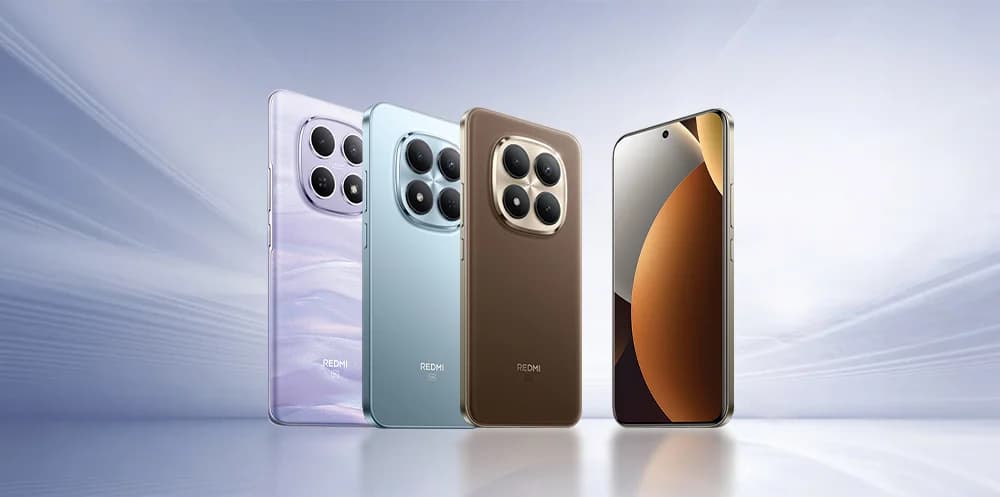
If you have shopped for a phone in Nairobi in the last few years, chances are a Xiaomi device came up, whether it was wearing the Xiaomi name, a Redmi badge, or a POCO logo. For a lot of buyers, it is not always obvious that these are all part of the same company. So let's break it down: where Xiaomi came from, what its sub brands actually do, the chips running inside these phones, and how the whole family is performing right here in Kenya.
From a Startup in Beijing to a Global Top Three Brand
Xiaomi was founded in April 2010 by Lei Jun and a small group of engineers in Beijing. It did not start as a phone company at all. The first product was MIUI, a custom version of Android built to feel faster and more polished than what most manufacturers were shipping at the time. The name Xiaomi comes from the Chinese word for millet, a small grain, and the idea behind the name was that something small could grow into something much bigger.
That is more or less exactly what happened. The company launched its first phone, the Mi 1, in 2011, and spent the next decade refining a formula that Kenyan buyers now know well: solid specifications, dependable build quality, and pricing that undercuts Samsung and Apple by a wide margin. By early 2026, Xiaomi had held a top three position in global smartphone shipments for sixteen consecutive quarters, trading places with Samsung and Apple depending on the region and season.
Today Xiaomi is no longer just a phone maker. It runs a wide "human, car, and home" ecosystem strategy, spanning electric vehicles (the SU7 sedan and YU7 SUV), smart home devices, wearables, and its unified HyperOS software, which replaced the older MIUI in 2023. But phones are still the heart of the business, and that is where the sub brands come in.
Redmi, POCO, and the Rest of the Family
Redmi began life in 2013 simply as Xiaomi's budget lineup, a way to offer capable phones at a lower price point than the main Xiaomi range. Over time it grew into its own distinct brand with a huge following, especially through the Redmi Note series, which has become known for large batteries, good cameras, and fast charging at prices most Kenyan buyers can actually afford. If you are shopping for Redmi models in our catalog, the Note series is usually the sweet spot between price and features.
POCO has a more dramatic origin story. It launched in 2018 with a single phone, the Pocophone F1, and that one device caused a genuine stir by packing flagship level performance into a much cheaper package. Two years later, Xiaomi spun POCO off to operate with its own identity, though it still shares Xiaomi's supply chain, software base, and manufacturing muscle behind the scenes. In practice, POCO is Xiaomi's performance focused line, built for buyers who care more about raw power and gaming than about camera bragging rights. You can browse POCO phones here if that is your priority.
Black Shark is the lesser known member of the family in Kenya. It started in 2018 as a Xiaomi backed gaming phone brand, built around devices with extra cooling, shoulder triggers, and high refresh rate displays. Black Shark's phone business has since wound down, and the brand has shifted toward gaming accessories rather than full handsets, but it is worth knowing the name if you come across an older unit.
Beyond phones, Xiaomi also backs dozens of smaller ecosystem brands you may recognize on shelves, including Dreame (vacuum cleaners), Mijia (smart home gadgets), and Haylou (audio and wearables). These are not phone brands, but they are part of the same wider Xiaomi universe, and it explains why the company describes itself as a lifestyle brand rather than just a phone manufacturer.
Xiaomi's Phone Brands at a Glance
Brand | Positioning | Typical Price Tier | Best For | Example Series |
|---|---|---|---|---|
Xiaomi | Flagship, premium build and cameras | High end | Buyers who want the best camera and display Xiaomi offers | Xiaomi 17, Xiaomi Mix Fold |
Redmi | Everyday value, big battery, fast charging | Budget to mid range | Most Kenyan buyers, students, first smartphone upgraders | Redmi Note 15, Redmi A series |
POCO | Performance first, flagship chips at lower prices | Mid range, some flagship | Gamers and power users who care about speed over camera specs | POCO X7, POCO F7 |
Black Shark | Gaming hardware, phone line discontinued | N/A (accessories only now) | Buyers who already own an older gaming unit | Black Shark 5 (last phone) |
Table aside, the easiest way to remember the split is this: Xiaomi builds the flagship halo, Redmi covers the volume market that most Kenyan buyers actually shop in, and POCO exists purely to win benchmark and gaming arguments at a lower price than the Xiaomi flagship line.
What Chips Actually Power These Phones
This is where a lot of buyers get confused, because "Xiaomi" is not a chip brand. Almost every Xiaomi, Redmi, and POCO phone sold in Kenya runs on a processor from either Qualcomm (Snapdragon) or MediaTek (Dimensity), the same two companies that supply chips to Samsung, Oppo, vivo, and most other Android brands. Entry level Redmi phones typically use budget MediaTek Helio or Snapdragon 4 series chips, mid rangers lean on Snapdragon 6 or 7 series and Dimensity 7000 series chips, and flagship Xiaomi and POCO models use the top tier Snapdragon 8 series or Dimensity 9000 series.
What has changed recently is that Xiaomi has been investing heavily in building its own silicon. The company's first attempt, the Surge S1, launched back in 2017 but never got a proper successor at the time. That changed in 2025 with the launch of the XRing O1, Xiaomi's first true flagship grade chip, built on a cutting edge 3 nanometre process and used in the Xiaomi 15S Pro and Pad 7 Ultra in China. A follow up chip, the XRing O2, is expected later in 2026, and Xiaomi has said it plans to release a new version roughly every year going forward.
For now, though, these in house chips are limited to select China market devices. The Xiaomi 17 series that launched globally, including the units reaching Kenya, still ships exclusively with Qualcomm Snapdragon chips. So if you are buying a Xiaomi, Redmi, or POCO phone in Nairobi today, you are almost certainly getting a Snapdragon or Dimensity chip inside, not Xiaomi's homegrown silicon. That is a good thing for buyers, since both Snapdragon and Dimensity have years of proven performance and wide app compatibility behind them.
A good real world example is the Xiaomi 17T Pro, one of the flagship class devices now available locally. It runs on MediaTek's Dimensity 9500, a 3 nanometre chip built for sustained gaming performance without heavy throttling, paired with a large 7000mAh battery and a Leica tuned camera system. We cover exactly how it performs day to day in our full Xiaomi 17T Pro review, including whether the chip and camera combo justify the price for Kenyan buyers.
How Xiaomi Is Performing in the Kenyan Market
Xiaomi's growth in Kenya has not been quiet. In early 2026, the company officially launched the Redmi Note 15 series in Nairobi, drawing senior telecom executives to the event, a sign of how seriously local carriers now treat the brand. According to Xiaomi's own country manager, the brand ranks third in the entire African smartphone market with roughly 12.6 percent market share, and it is still climbing.
Perhaps the most telling stat comes from Safaricom itself. A representative from the carrier stated publicly that Xiaomi branded devices, which includes Redmi and POCO phones, now make up more than half of all smartphones active on the Safaricom network. That is a remarkable figure in a market where Samsung and various Chinese value brands have traditionally fought hardest for the entry level and mid range segment.
The reasons are not complicated. Kenyan buyers are price sensitive, data conscious, and increasingly demanding when it comes to camera quality and battery life, and the Redmi Note line in particular has become a default recommendation for exactly that kind of buyer. Xiaomi has also leaned into local partnerships, working directly with Safaricom to push affordable devices onto the network, which only accelerates adoption.
The Bottom Line for Kenyan Buyers
Whether the phone in front of you says Xiaomi, Redmi, or POCO, you are looking at the same parent company with three different personalities: Xiaomi for flagship ambition, Redmi for everyday value, and POCO for performance on a budget. All three rely on trusted Snapdragon or Dimensity chips rather than experimental in house silicon, at least for now, and all three have quietly become some of the most common phones on Kenyan networks today.
If you are trying to decide which Xiaomi family phone fits your budget and needs, it also helps to understand whether you want a brand new sealed unit or a certified Grade A ex-UK or ex-USA device, since both options apply across the Redmi and POCO ranges. You can also check our running list of best phones under KSh 30,000 in Kenya for current Redmi and POCO picks, or head straight to our Xiaomi, Redmi and POCO catalog to compare models and prices in stock right now.